


Sleep in a City That Never Cools Down: Heat, Light and the Architecture of a Night

Sleep in a city
that never cools down
Falling asleep is not a decision. It is a temperature change — and almost everything about a summer here works against the one condition your body needs in order to begin.
Half past two in July. The air conditioning has been running since April and the room is cold enough that you have pulled the duvet back over yourself, which is its own kind of absurd. Outside it is still above thirty. You ate at half past ten because that is when everyone eats here, the last three hours of the evening were spent under bright ceiling lights and a phone, and the last time you were outdoors in daylight was for the ninety seconds between a car and a mall entrance. You have been in bed since midnight. You are tired. Nothing is happening.
This is one of the most common complaints from people who have moved to the Gulf, and it is almost always treated as a psychological problem — stress, screens, too much on your mind. Some of that is usually true. But there is something more mechanical underneath it, and it is worth understanding first, because it responds to changes that are entirely within your control.
Sleep does not begin in the mind. It begins when the body is allowed to lose heat — and a night that never cools, inside a room cooled artificially and stripped of humidity, gives that system a set of contradictory instructions.
myTERRAWhat follows is the physiology, plainly: why heat loss initiates sleep, what dry air does to the nose and therefore to the night, why daylight avoidance weakens the clock that times all of it, and what a late main meal costs. Then the practical half — an evening built around those facts, using four products that suit different parts of it. Serenity and Cedarwood for the wind-down, Lavender as the most-studied aromatic for settling, Frankincense for the last quiet part of the evening.
Six things that decide whether you sleep here
None of this is speculative, and none of it is specific to essential oils. It is ordinary sleep physiology, and it explains why the same person sleeps differently in Oradea and in Dubai.
Core body temperature follows a daily curve, peaking in the early evening and falling across the night. That fall is not a consequence of being asleep — it begins before sleep onset and is part of what permits it. The body achieves it by opening the blood vessels of the hands, feet and face, moving warm blood to the surface where heat can escape. This is why cold feet make it harder to drop off, and why a warm shower an hour or so before bed helps rather than hinders: it brings blood to the skin, and the rebound cooling that follows is steeper than if you had done nothing. Everything else in this article is either a support for that mechanism or an obstacle to it.
A cool bedroom helps, which is why the advice is repeated everywhere. But the mechanism above sets a limit that is usually left out: if the room is cold enough that the skin of your hands and feet constricts, you have closed the route heat was meant to leave by. The result is familiar to anyone who sets the thermostat very low and then sleeps under a heavy duvet with cold feet — a cold room, a warm core, and a long time awake. A moderately cool room with light covering does more than an aggressively cold one, costs less to run, and avoids the second problem, which is what that much air conditioning does to the air itself.
Air conditioning cools by condensing moisture out of the air, so a room held at a low temperature for months is also a room held at low humidity. Nasal and throat mucosa depend on moisture to stay functional; when they dry out, the tissue swells and secretions thicken, which narrows the airway. The consequences arrive at night: congestion that appears only when you lie down, a switch from nose to mouth breathing, a dry throat at four in the morning, more snoring, and brief awakenings you may not remember. Many people here blame stress for a broken night when the actual cause is a nose that cannot do its job in air this dry.
The timing of everything — the temperature curve, melatonin release, alertness — is set by a small region of the brain that takes its main cue from light reaching the eye. Morning light is the strongest signal it receives. The difficulty here is structural rather than personal: for much of the year, daytime outdoors is genuinely unpleasant, so life moves inside, and indoor lighting is a fraction of outdoor daylight in intensity even when a room feels bright. A clock receiving a weak morning signal and a strong evening one — bright interiors, screens, late shopping — drifts later. That drift is felt as being wide awake at midnight and unable to wake at seven.
Social life here runs late, and a main meal at half past ten is entirely normal. Digestion is metabolically active work: it raises body temperature slightly and requires blood flow to the gut at exactly the point in the evening when the body is trying to shed heat and wind down. Lying down on a full stomach also makes reflux more likely, which is a common and under-recognised cause of waking in the small hours with a cough or a sour throat. None of this means a late dinner is forbidden — it means the size of the late meal matters more than the hour of it, and that a heavy meal and a good night are partly in competition.
Brief awakenings are a normal feature of a night, and most of them are never remembered. What determines how you feel the next day is less the total hours than whether the night's structure survived — whether the deep stages got their share early on and the dreaming stages theirs later. Eight hours of repeatedly interrupted sleep can leave you flatter than seven undisturbed ones. This is why the interventions that work are mostly about protecting the shape of the night: a stable schedule, a room that does not wake you at three, a nose that stays clear, and a consistent signal that the day has ended.
Four stages, and why the order of them matters
Sleep is not one state. An adult moves through a repeating sequence of stages in cycles lasting roughly an hour and a half, and the composition of those cycles changes as the night goes on: the deep stages dominate the first half, the dreaming stages the second.
That asymmetry has a practical consequence most people have never been told. Going to bed two hours late does not simply shorten your night by two hours — it removes a specific part of it. Waking two hours early removes a different part. Both feel like tiredness and they are not the same deficit.
The transition out of wakefulness. Muscles let go, thoughts become disjointed, and a small noise returns you to being awake with the impression that you were never asleep at all. It occupies only a short part of a healthy night; a night made largely of N1 is what people describe as sleeping badly all night while their partner insists they slept.
Body temperature and heart rate settle further and the brain produces characteristic short bursts of activity associated with consolidating what was learned during the day. It is not glamorous and it is not "light sleep" in any dismissive sense — it is the majority of the night and much of its memory work.
Slow-wave sleep, the hardest stage to be woken from and the one associated with physical restoration. Crucially, it is concentrated in the early cycles. A late bedtime with a fixed morning alarm therefore cuts into the deep half of the night, which is why it produces a specifically physical kind of tiredness.
Vivid dreaming, rapid eye movement, near-paralysis of the skeletal muscles, and a role in emotional processing. REM episodes lengthen through the night, so the last two hours before a natural waking are disproportionately REM. Cutting a night short at the end removes mostly this — which tends to show up as emotional thinness rather than physical fatigue.
Six situations, and what actually changes them
the approximate fall in core body temperature across a night. The decline starts before sleep onset and is part of what permits it, which is why heat loss through the skin matters so much.
Reference: standard sleep and thermoregulation physiologythe typical length of one adult sleep cycle. Deep stages dominate the early cycles and dreaming stages the later ones, so where you cut the night decides which part you lose.
Reference: sleep architecture, typical adult valuesthe order-of-magnitude gap between outdoor daylight and ordinary indoor lighting. A room can feel perfectly bright and still be a weak signal to the system that times your night.
Reference: commonly cited illuminance magnitudes, indoor versus outdoorFigures given for orientation, as general reference points rather than clinical measurements. Every body responds differently — consult a qualified professional for individual guidance.
TERRA
WI
Poor sleep is sometimes the problem itself and sometimes the place where something else shows up first — sustained stress, a heavy digestive load, a schedule that never settles. The myTERRA Wellness Index scores five pillars and shows where the weight actually sits, which is a better starting point than treating every bad night the same way.
Serenity, Cedarwood, Lavender and Frankincense — the wind-down, built
These four are chosen for different parts of the evening rather than as alternatives to each other. Serenity is the complete blend for the last hour, Cedarwood the woody base note for nightly use, Lavender the most-studied single oil for settling, Frankincense the one for the quiet part before bed. None of them is a sedative and none replaces the changes to light, temperature and meal timing above — they work as the signal that the day has ended, which is a real and underrated part of falling asleep.
Serenity
Restful blend — 15ml · Lavender, cedarwood, ho wood, ylang ylang, marjoram, Roman chamomile, vetiver, Hawaiian sandalwood, vanilla bean absoluteSerenity is built for one job, and its composition tells you exactly what that job is: lavender and cedarwood at the centre — the two most commonly used aromatics for settling — with ho wood, ylang ylang, marjoram and Roman chamomile filling out the middle, vetiver and Hawaiian sandalwood giving it depth at the base, and a small amount of vanilla bean absolute rounding the top. The result is warm, soft and unmistakably an evening scent rather than a daytime one. Two things make it the most useful of the four here. The first is that complexity works in its favour as a nightly cue: a nine-component blend produces a scent pattern you will not meet by accident during the day, so it can come to mean one thing only — the evening has ended. Used at the same point in the same sequence for a few weeks, it stops being a pleasant smell and becomes a signal, and that signal shortens the gap between deciding to sleep and actually doing so. The second is practical: it is easy to live with in a shared bedroom, where a sharper oil becomes a negotiation. What it is not, and what we will not claim it is, is a sleeping aid. It does not sedate, it does not treat insomnia, and it will not compensate for a room at nineteen degrees with dry air and a heavy meal at eleven. Put those right first, then let the scent mark the boundary.
- ◆Diffuse intermittently for the last 30 to 60 minutes before bed
- ◆One drop diluted in Fractionated Coconut Oil, on the wrists or the soles
- ◆Same point in the same sequence every night — the consistency is the mechanism
- ◆Keep it for the evening only; an oil used all day signals nothing
- ◆Give it three to four weeks before judging whether it works for you
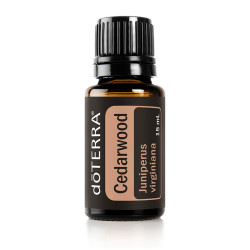
Cedarwood
Juniperus virginiana — 15ml · Steam distilled from the woodCedarwood is the least demonstrative of the four and, for that reason, the one most people end up using every night. Distilled from the wood rather than a flower or a peel, it is dry, woody and almost architectural — closer to the smell of a cupboard in an old house than to anything you would call a fragrance. Its principal constituents are the sesquiterpenes cedrol, α-cedrene and thujopsene, and cedrol in particular has been the subject of inhalation research into calming, sedative-like effects; the wider literature on it is smaller than lavender's, so it belongs in the category of promising rather than established. What is not in question is how easy it is to use. It is low, quiet and non-floral, which matters in a shared bedroom where one partner finds sweeter oils intrusive; it layers underneath Lavender without competing with it; and it is among the most affordable oils in the range, which is a practical point when something is meant to run every night for months rather than on occasion. Used as a base it also makes an anchor more robust, because a woody note persists in a room longer than a bright top note does.
- ◆Two drops with two of Lavender — the simplest evening pairing
- ◆The quiet choice where a partner objects to sweeter oils
- ◆Diluted on the back of the neck or the soles before bed
- ◆Woody notes persist longer in a room than citrus or floral tops
- ◆Store cool and dark; keep the bottle tightly closed
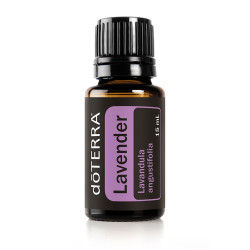
Lavender
Lavandula angustifolia — 15ml · Steam distilled from the flowering topsIf only one oil were available for the evening, it would be this one, and that is a judgement about the evidence rather than the smell. Lavender is by a wide margin the most studied aromatic in this area, with a body of work on inhalation and subjective sleep quality, self-reported calm and anxiety measures in settings ranging from hospital wards to student halls. Two constituents carry most of that interest — linalool and linalyl acetate, which together make up the greater part of the oil. It is worth being accurate about the size of the finding: the effects reported are typically modest and mostly concern how people rate their own sleep rather than large changes in measured sleep structure. That is still worth having, and it is considerably more than can be said for most aromatics, but it makes lavender an addition to good sleep conditions rather than a substitute for them. Practically, it is the most versatile of the four: gentle enough to be the usual choice for children's routines when properly diluted, useful on the pillow or a tissue rather than a diffuser when travelling, and unobjectionable to almost everyone. Its one real drawback is familiarity — it is common enough in soaps and cleaning products that it can be a slightly weaker anchor than a blend nobody meets by accident.
- ◆One or two drops on a tissue tucked beside the pillow, not on the pillowcase
- ◆Children: heavily diluted in carrier oil, on the soles, with paediatric advice
- ◆The travel option — no diffuser required
- ◆Pairs with Cedarwood underneath for a fuller, more distinctive cue
- ◆Patch test on the inner forearm before first use on skin
Frankincense
Boswellia carterii, frereana, papyrifera & sacra — 15ml · Steam distilledFrankincense sits slightly apart from the other three. It is not a settling oil in the way lavender is, and it is not marketed as one; what it is good at is marking stillness, which is a different and often more useful thing an hour before bed. In Gulf homes that role needs no introduction — luban burning in the evening is routine here rather than a revival, and the association between this resin and the quiet, set-apart part of a day is older than any research on the subject by thousands of years. The distilled oil is dominated by α-pinene alongside limonene, α-thujene and sabinene: a monoterpene profile with documented anti-inflammatory activity and an influence on airway tone, and one that people consistently describe in terms of clarity rather than drowsiness. It is worth stating plainly, since it is widely repeated otherwise, that the boswellic acids which dominate the Boswellia research literature are large, non-volatile molecules that stay in the resin and do not carry over into steam-distilled oil. The oil has its own real constituents and does not need to borrow the resin's evidence. In an evening sequence it belongs earlier than Serenity — reading, prayer, the last conversation of the day — with the settling blend kept for the final stretch.
- ◆The hour before the wind-down — reading, reflection, quiet
- ◆One drop in the palms, inhaled slowly, rather than diffused all evening
- ◆Layers under Serenity when the evening needs both stages
- ◆Culturally continuous here — the same resin, a different delivery
- ◆Store cool and dark; monoterpenes degrade fastest of all fractions
Use with care: None of these products is a sleep medication and none should be used in place of medical assessment for persistent insomnia or suspected sleep apnoea. Dilute undiluted oils in Fractionated Coconut Oil before skin application and patch test on the inner forearm first. For children, dilute heavily, apply to the soles rather than the chest or face, and take paediatric advice before regular use; oils high in 1,8-cineole or menthol should be kept away from the faces of young children entirely. Diffuse intermittently rather than continuously — olfactory receptors adapt within minutes, so intervals deliver a stronger perceived signal and use far less oil. Ventilate the bedroom and start with short runs at low output if anyone present has asthma or a respiratory condition. Anyone who is pregnant, breastfeeding, or managing a diagnosed condition should speak to their doctor before regular use. If dryness or night-time congestion is the main problem, address the air first — Easy Air diffused earlier in the evening is for clear breathing, not for sedation.
Four parts of a night that are actually within your control
The sequence: bring the lighting down — lamps rather than ceiling lights — put the screens somewhere else, and start the diffuser with Serenity or Cedarwood with Lavender on intermittent mode. The shower: a warm one roughly sixty to ninety minutes before bed brings blood to the skin and produces a steeper fall in core temperature afterwards. Counterintuitive and genuinely useful. Why the order matters: the point is not relaxation for its own sake but a repeated, identical sequence — the same steps, the same scent, the same room — which the body learns to read as the end of the day. Timescale: two to four weeks of consistency before it feels automatic.
Temperature: cool but not cold — if your feet are cold under the duvet, the setting is working against you rather than for you. Moderately cool with light covering beats aggressively cold with a heavy one. Air: months of conditioning means months of low humidity, which is the usual cause of night-time congestion and a dry throat before dawn. Add moisture to the room, keep the filters clean, and clear the nose before lying down. Darkness and noise: blackout where the city is bright, and a steady low sound is better than an intermittent one — an air-conditioning unit cycling on and off is a worse neighbour than one running evenly.
The realistic version: telling anyone in this region to finish eating by seven is advice that will simply be ignored, so the useful lever is size rather than hour. Make the substantial meal the earlier one where you can, and keep the late one light — protein and vegetables rather than a heavy, fatty or very spicy plate, which sits longer and raises the chance of reflux once you are horizontal. Caffeine: its effects persist for many hours, so an afternoon coffee is a legitimate suspect in a midnight problem. If you wake with a cough or a sour throat: that pattern points at reflux, and the fix is meal timing and composition, not a stronger evening ritual.
The principle: a night is timed by the morning that precedes it. Getting daylight into your eyes within an hour of waking is the strongest single correction available for a clock that has drifted late — and in this climate the early morning is also the one pleasant part of the outdoor day, so the window exists even in summer. Ten to twenty minutes outdoors, without sunglasses, no sun exposure required. The wake time, not the bedtime: fix the hour you get up, including at weekends, and the bedtime follows on its own. Fixing the bedtime while the wake time floats does almost nothing. A morning anchor: if the evening has Serenity, give the morning something as clearly different — Wild Orange diffused while you get ready marks the other end of the day.
Five things worth getting right before anything else
-
01Fix the wake time, not the bedtime
You cannot decide to fall asleep, which makes a target bedtime a promise you have no way of keeping. You can decide when to get up. A constant wake time — seven days a week, not five — stabilises the whole cycle from the other end: it sets the timing of the temperature curve and builds a predictable pressure to sleep by the following night. Two late weekend mornings are enough to shift a clock by a couple of hours, which is why Sunday night feels the way it does. If you change one thing in this article, change this one.
-
02Cool the body, not just the room
The thermostat is the obvious lever and the least precise one. What matters is whether heat can leave through the skin of your hands and feet, and that happens more reliably with a warm shower an hour before bed, uncovered feet, light bedding and a moderate room than with a cold room and a heavy duvet. If you are lying awake with cold extremities in a chilled room, the problem is not that the room is too warm. Warm the periphery, cool the core — that is the actual instruction, and it is the opposite of what most people do in a hot climate.
-
03Diffuse in intervals, not all night
Olfactory receptors adapt within minutes of steady exposure, so a diffuser running for six hours delivers a strong scent to anyone walking in and almost nothing to the person in the bed. Intermittent mode — a few minutes on, twenty or thirty off — keeps the signal perceptible, uses a fraction of the oil, and avoids saturating a closed, air-conditioned bedroom. There is also no reason to run a diffuser while you are unconscious: the cue matters in the last hour before sleep, not during it. Running it all night is the single most common mistake here.
-
04One scent, one meaning
A cue works by exclusivity. If your evening blend is also the oil you diffuse while working, cooking and driving, it is associated with all of those and therefore signals none of them. Keep the evening oil for the evening and use something else for general pleasure — there is no rule against enjoying a smell simply because you enjoy it, and no reason that oil has to be the one doing the work at eleven at night. This is why a complex blend like Serenity makes a better anchor than a single common oil: you will not meet it by accident in a lift or a taxi.
-
05Do not lie in bed trying
If you have been awake for what feels like twenty minutes or more, get up, keep the lights low, and do something undemanding until you feel sleepy again. This is not a tolerance of defeat; it is the one instruction in the whole of sleep advice with the strongest support behind it. Time spent awake in bed teaches an association between the bed and being awake, and that association is the engine of chronic insomnia. Protect what the bed means. The rest of this article is about making the first attempt work; this rule is about not damaging anything when it does not.
The questions this subject usually raises
Should the bedroom be cold, or is that advice overdone?
Cool helps; cold is a different thing and can work against you. Sleep onset depends on heat leaving the body through the skin of the hands, feet and face, and a room cold enough to constrict those vessels closes the exit. The familiar result is a chilled room, a heavy duvet, cold feet and a long wait. A moderately cool room with light covering is more effective, cheaper to run, and gentler on the humidity — which matters here, because months of hard cooling produce months of very dry air and the night-time congestion that follows from it. If you want a rule of thumb: comfortable under a light cover, with your feet not cold.
Does lavender actually do anything, or is it just pleasant?
There is a real body of research on inhaled lavender and how people rate their own sleep and calm, and it is by a distance the most studied aromatic in this area — so the honest answer is that it does something, and that the something is modest. The reported effects are mostly on subjective ratings rather than large changes in measured sleep structure, and the studies vary in quality. Treat it as a worthwhile addition to good sleep conditions rather than a replacement for them: it will not overcome a cold dry room, a late heavy meal and a clock that has drifted by two hours. A good part of the benefit anyone experiences also comes from the ritual itself — a consistent, repeated signal that the day has ended — and that is a legitimate mechanism, not a placebo to be embarrassed about.
Why do I wake at three every night?
Brief awakenings at the boundaries between sleep cycles are normal and usually forgotten. What makes one memorable is something waiting to be noticed at that moment — a dry mouth and blocked nose from conditioned air, a blanket that has become too warm, reflux from a late meal, light from outside, or a mind that finds a problem to work on. So the useful question is not why you wake but what keeps you awake once you have. Deal with air and temperature first, meal timing second, and light and noise third. If it happens with a cough or a sour throat, suspect reflux; if it comes with loud snoring or a sense of choking, that needs a doctor rather than a diffuser.
Can I use these oils in a child's bedroom?
With caution and with paediatric advice, particularly for infants and toddlers. The general principles: diffuse briefly and at low output in a ventilated room rather than continuously, dilute heavily for any skin use and apply to the soles rather than the chest or face, and keep oils high in 1,8-cineole or menthol away from the faces of young children altogether. Lavender, well diluted, is the usual starting point. Just as important is the non-aromatic part: children's sleep is often more sensitive to context than adults', so an unchanging bedtime sequence — same order, same room, same scent — tends to do more than the choice of oil. If a child has asthma, a respiratory condition or any diagnosed condition, ask their doctor first.
My sleep got worse after moving here. Will it settle by itself?
Partly, and not entirely on its own. Some of it is ordinary adjustment to a new place and a new schedule, and it fades. But three of the causes described above are structural rather than temporary — a life lived mostly indoors gives the body clock a weak light signal, long months of air conditioning give you very dry air, and the local social rhythm puts the main meal late. Those do not resolve with time; they resolve with deliberate changes, and the highest-value ones are morning daylight and a fixed wake time. Give any change three to four weeks before judging it. If you are still sleeping badly after that, or if daytime sleepiness is affecting your work or your driving, that is the point to see a doctor rather than to keep adjusting your evening.
Loud snoring with pauses in breathing, gasping or choking at night, waking unrefreshed after a full night, or significant daytime sleepiness — particularly if you drive — should be assessed by a doctor. Obstructive sleep apnoea is common, frequently missed, and highly treatable, and no wellness routine substitutes for a diagnosis. The same applies to insomnia persisting beyond a few weeks despite good sleep conditions, to sleep problems accompanied by persistent low mood or marked anxiety, to restless or crawling sensations in the legs at night, and to any sudden change in your sleep you cannot explain. Nothing in this guide diagnoses or treats any condition; it describes ordinary sleep physiology and an evening routine built on it, and it should never be a reason to delay an assessment that is warranted.
A night begins
long before
you lie down.
Take the free myTERRA Wellness Index assessment and find out which of the five pillars is carrying the load right now — immunity, digestion, energy and recovery, sleep and stress, or emotional balance — with a protocol built for that pattern rather than the average one.
Free Wellness Index assessment · Authentic doTERRA CPTG products · Delivery across the UAE
Related Products