Skin in a High-UV, Air-Conditioned Climate: The Barrier, the Water and the Sun
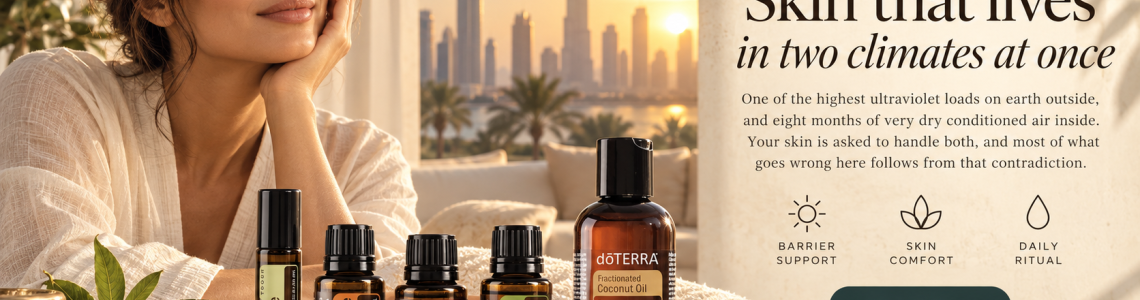
Skin that lives
in two climates at once
One of the highest ultraviolet loads on earth outside, and eight months of very dry conditioned air inside. Your skin is asked to handle both, and most of what goes wrong here follows from that single contradiction.
Two complaints arrive in the same conversation, and people rarely notice that they contradict each other. The first is that their skin has become dry and tight since moving here — flaking around the nose, a face that feels drawn an hour after washing, hands that look older than they did. The second is that it also breaks out more, particularly across the back and shoulders in summer, and that a tan they never asked for has settled unevenly across their cheekbones.
Both are true at once, and both make sense. You live outdoors in an extreme ultraviolet environment for the minutes you are in it, and indoors in an artificially dried one for almost everything else, and the skin barrier is caught between them. Add long hot showers, water that varies considerably in what it carries, and months where sweat has nowhere to evaporate.
Almost everything people try to fix with products is a barrier problem, and almost everything they blame on age is a sun problem. Getting those two the right way round is worth more than anything in a bottle.
myTERRAWhat follows is how the barrier actually works, why a humid country produces dry skin, what showers and water do to it, and what heat and occlusion cause in summer. Then the honest part: carrier oils do useful work, essential oils have a real but narrow role, and no oil is a sunscreen — a point worth stating early, because the opposite is one of the more dangerous claims circulating in this industry, especially at this latitude.
Six things that decide how your skin behaves here
Ordinary dermatological physiology, none of it specific to essential oils, and all of it useful for working out which of your complaints is which.
The outermost layer of skin is a few dozen cells thick and behaves like a wall: flattened cells as the bricks, a mortar of lipids between them — ceramides, cholesterol and fatty acids in a particular ratio. That mortar is what keeps water in and irritants out, and it is the thing that fails in almost every case of dry, tight, sensitive skin. Nothing about that layer is decorative: when the lipid mortar is depleted, water escapes faster than it can be replaced, the surface feels tight within minutes of washing, and substances that would normally be ignored start to sting.
The paradox that confuses everyone: outdoors is humid for much of the year, but you spend almost all your time in air that has been cooled by condensing moisture out of it. Conditioned interiors sit at low humidity for months, and water leaves skin passively into dry air faster than into damp air. So the same person who arrives sweating spends nine hours in an environment quietly drawing water out of their face. This is why dry skin is so common in a place people assume must be the opposite, and why the fix involves indoor humidity as much as any product.
Healthy skin sits on the acidic side of neutral, and that mild acidity supports the enzymes that maintain the barrier and the microbial population that lives on it. Traditional soap is strongly alkaline and pushes the surface upwards, and it takes hours to recover — longer if you do it twice a day with hot water. Repeated over months, that is enough on its own to produce the tight, reactive, flaky skin people then try to treat with increasingly elaborate products. Switching to a gentler, lower-pH cleanser is cheap, dull and one of the most effective interventions available.
Water in this region comes largely from desalination, often blended with other sources and delivered through building tanks, so hardness and residual chlorine vary noticeably between emirates, neighbourhoods and even buildings. Where water is hard, soap forms an insoluble residue that sits on skin and hair and is a plausible contributor to that squeaky-then-tight feeling; where chlorine is noticeable, it adds mild irritation. The evidence linking hard water directly to skin conditions is mixed rather than settled, so the sensible position is modest: a gentler cleanser and a shorter, cooler shower address the effect regardless of the cause.
The great majority of what people describe as facial ageing — pigmentation, loss of elasticity, fine lines, uneven tone — is cumulative ultraviolet damage rather than the passage of time, and it is dose-dependent. The ultraviolet load in this region is very high for much of the year, and it does not require you to be at the beach: the walk across a car park, the school run, a window seat and a drive home accumulate. This is also the one area of skin care where the evidence is not ambiguous. Daily sun protection does more than every other product combined, and nothing else in this article competes with it.
In months when sweat cannot evaporate, it sits on the skin under clothing, in gym kit, under a bag strap, along a hairline. Blocked sweat ducts produce the fine itchy rash most people call heat rash; occluded hair follicles in warm, damp conditions produce the small bumps across the back and shoulders that are often mistaken for acne and treated accordingly; and warm skin folds favour fungal overgrowth. The common thread is time spent damp and covered, which is why the effective measures are prompt showering, breathable fabrics and not applying thick occlusive layers to affected areas.
Four complaints that need four different responses
These four are routinely treated with the same product, which is why so much skin care underperforms. Two of them want more oil and two of them very much do not.
Anything that does not fit these patterns, is one-sided, is changing, or is not improving over weeks belongs with a doctor rather than a routine — the last card sets out the specifics.
Tightness within minutes of washing, flaking, products that suddenly sting. The mortar between the cells is depleted. Wants: a gentler cleanser, cooler and shorter showers, moisturiser applied to damp skin, and an occlusive layer on top. Oils help here, as the outer layer rather than the whole answer.
Uneven tone, patches across the cheekbones and forehead, fine lines, laxity. Cumulative sun exposure, and dose-dependent. Wants: daily broad-spectrum sun protection, shade and hats, and evidence-based actives from a pharmacy or dermatologist. No oil addresses this, and citrus oils make it worse.
Fine itchy rash in covered areas; small uniform bumps across back and shoulders in summer. Wants: showering promptly after sweating, loose breathable fabrics, less friction — and specifically not heavy occlusive oils on the affected area, which is the common mistake.
A mole that is changing in size, shape or colour; a sore or scaly patch that does not heal; a rash that is spreading, painful, weeping or one-sided; suspected eczema, psoriasis, rosacea or acne needing treatment. Dermatology is excellent and accessible here — and early is better for all of these.
Six settings, and what each actually needs
the mildly acidic range of healthy skin surface. Traditional soap is strongly alkaline and pushes it well above this, which is why cleanser choice matters more than most product decisions.
Reference: standard dermatological values for skin surface pHthe reapplication interval general sun protection guidance gives during exposure, and more often after swimming or heavy sweating. The single most effective habit in this article.
Reference: general sun protection guidancethe dilution range standard practice gives for essential oils on facial skin — roughly one to two drops in a teaspoon of carrier. Undiluted application to the face is not a stronger version of this.
Reference: standard aromatherapy dilution practiceFigures given for orientation, as general reference points rather than clinical measurements. Every body responds differently — consult a qualified professional for individual guidance.
TERRA
WI
Skin is visible, which makes it an unusually honest reporter: a run of short nights, a heavy travel month, poor hydration or a stretch of sustained stress all tend to show up on a face before they are named. The myTERRA Wellness Index scores five pillars and shows which one is actually carrying the load.
Immortelle, Frankincense, Geranium, Tea Tree and the carrier that does the work
Before the products, the boundary. Essential oils are not moisturisers — they contain no water and no ceramides, and they do not replace the lipid mortar between skin cells. Carrier oils do genuine occlusive and emollient work, which is why the least glamorous item here is arguably the most useful. And no oil in this article, or anywhere else, offers meaningful protection from ultraviolet light.
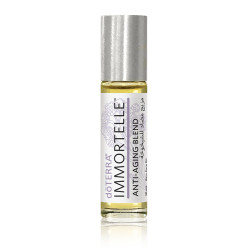
Immortelle
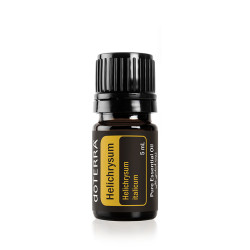
Anti-ageing blend, 10ml roll-on · Frankincense, Hawaiian sandalwood, lavender, myrrh, helichrysum, rose — pre-diluted in fractionated coconut oilImmortelle is the most practical of the group for facial use, for two reasons that have nothing to do with the marketing. First, it arrives pre-diluted in fractionated coconut oil in a roll-on, which removes the step where most people go wrong — applying undiluted essential oil to the thinnest skin on the body. Second, it is built from the materials traditionally used on mature skin, including helichrysum — available here as a single oil too, though at a price that makes a pre-diluted blend the more sensible way to use it daily. The composition is genuinely expensive: frankincense and myrrh resins, Hawaiian sandalwood, rose, helichrysum. Now the honest part, because this is the category where claims run furthest ahead of evidence. There are no good human trials showing that this or any comparable blend reduces wrinkles or reverses photoageing, and we are not going to imply there are. What it does, reliably: it is a pleasant, well-diluted facial oil that adds an emollient layer over a moisturiser and makes an evening routine something you keep. What actually changes the appearance of ageing skin over years is daily sun protection and, if you want more, evidence-based actives from a pharmacy or dermatologist. Use this alongside those, not instead of them.
- ◆Evening, over a moisturiser applied to damp skin — not instead of it
- ◆Patch test on the inner forearm for two days before facial use
- ◆Around the eyes: on the orbital bone, never on the lid or lash line
- ◆Daytime protection is a separate product — this is not one
- ◆Stop if it stings, reddens or itches; that is not "working"
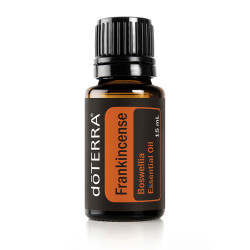
Frankincense
Boswellia carterii, frereana, papyrifera & sacra — 15ml · Steam distilledFrankincense has been used on skin across this region for millennia, and in the Gulf that history is domestic rather than academic — the resin has been part of household practice here for a very long time. The distilled oil is dominated by α-pinene alongside limonene, α-thujene and sabinene, a monoterpene profile with documented anti-inflammatory activity in laboratory work. Two corrections are needed, though, and they are the reason this card exists. First, the boswellic acids that dominate the Boswellia research literature are large, non-volatile molecules that remain in the resin and do not carry over into steam-distilled oil, so studies on boswellic acids are not evidence for this bottle. Second, the specific claims attached to frankincense for skin — that it removes wrinkles, tightens or reverses damage — do not have credible human trial support, and we will not repeat them. Its real place is as a small, well-diluted addition to an evening facial oil, with a scent that makes the routine worth keeping, on skin that tolerates it. At this price, buy it because you value the material, not because of a promise.
- ◆One drop in a teaspoon of Fractionated Coconut Oil, evenings
- ◆Pairs with Myrrh for a thicker, more resinous facial blend
- ◆Never undiluted on the face, and never near the eyes
- ◆Store cool and dark; oxidised oil is more likely to irritate
- ◆Not a treatment for ageing, pigmentation or sun damage
Geranium
Pelargonium graveolens — 15ml · Steam distilled from the leavesGeranium is the oil most often reached for when skin is neither clearly dry nor clearly oily, and its traditional description as balancing is a fair summary of how people use it rather than a mechanism. It is dominated by the monoterpene alcohols citronellol and geraniol, with esters giving it the soft rose-like character that makes it a common substitute for rose in formulation, at a fraction of rose's cost. In practice it is pleasant, versatile, works well diluted into a facial or body oil, and unlike the citrus oils carries no phototoxicity, which is a genuine advantage in this climate. The caution is worth taking seriously rather than skimming: geraniol and citronellol are recognised fragrance allergens and appear on European labelling lists for that reason, so geranium sits in the moderate-risk group for sensitisation. Practically, that means patch testing properly before facial use, keeping it at one to two per cent, not applying it daily to the same patch of skin indefinitely, and replacing an old oxidised bottle rather than persisting with it, since oxidised oil is considerably more likely to irritate.
- ◆One to two drops in a teaspoon of carrier, for face or body
- ◆No phototoxicity — usable when citrus oils are not
- ◆Patch test properly; stop at the first sign of redness or itch
- ◆Rotate rather than applying to the same area every day for months
- ◆Replace an oxidised bottle; stored cool and dark, tightly closed
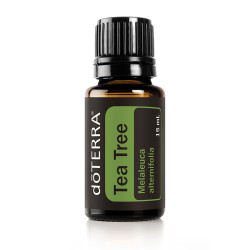
Tea Tree
Melaleuca alternifolia — 15ml · Steam distilled from the leavesTea tree has the strongest evidence base of anything here for skin, and it is worth being precise about its shape: terpinen-4-ol, the dominant constituent, has extensive documented antimicrobial and antifungal activity in laboratory testing, and there is a reasonable clinical literature on topical use for minor blemishes and superficial fungal problems. In a climate that keeps people warm, damp and covered for months, that is a genuinely useful profile — the small nuisances of humid heat are exactly its territory. Use it as a spot treatment, diluted, on a specific place, not spread across a whole face or back; broad application on already irritated skin tends to make things worse rather than faster. One storage point matters more with this oil than almost any other: tea tree oxidises on exposure to air, light and heat, and oxidised tea tree is substantially more likely to irritate or sensitise skin than fresh oil. In this climate that means a tightly closed bottle, kept genuinely cool and dark, and replacing a bottle that has been open for a long time instead of finishing it out of thrift.
- ◆Diluted, on a specific spot — not across a whole area
- ◆Feet and between the toes after a summer in closed shoes
- ◆Patch test first; stop if the skin reacts rather than settles
- ◆Store cool, dark and closed; oxidised oil sensitises
- ◆Persistent or spreading skin problems: see a doctor, not a bottle
Fractionated Coconut Oil
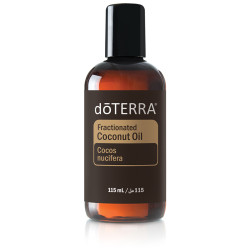
Caprylic/capric triglyceride, 115ml · Fractionated from coconut oil — liquid at room temperature, long shelf lifeIf you buy one thing after reading this, buy this one. Fractionated coconut oil is the medium-chain triglyceride fraction of coconut oil, separated so that it stays liquid, has almost no smell and resists going rancid — which makes it the standard carrier for essential oils and, in its own right, a genuinely useful emollient. Every dilution instruction in this article assumes it. On what it does and does not do, precisely: as an occlusive and emollient layer it reduces water loss from the skin surface and improves how skin feels and looks immediately, which is real and worth having. What it does not do is replace the ceramides and cholesterol of the barrier's own mortar, so for properly compromised skin it works best over a water-based moisturiser rather than in place of one — the order is damp skin, moisturiser, then oil to seal. Two practical notes for here. It is light enough to be tolerable in this heat, unlike heavier butters. And it is the right tool for the single most common mistake in aromatics: essential oils applied neat to a face, which is not a stronger treatment but a faster route to sensitisation.
- ◆The carrier for every dilution above — one teaspoon, one or two drops of oil
- ◆Order that works: damp skin, moisturiser, then oil to seal
- ◆Hands and forearms after washing, and overnight on dry heels
- ◆Light enough for this climate, unlike heavier balms and butters
- ◆Test on the body first if your face is prone to congestion
Use with care — and the sun point first: No essential oil or carrier oil in this article provides meaningful protection from ultraviolet light, and none should ever be used in place of sunscreen. Cold-pressed citrus peel oils — lemon, lime, bergamot, wild orange and grapefruit among them — are phototoxic and increase the risk of burning, so they do not belong on skin that will see the sun, which in this climate means most skin. Never apply undiluted essential oils to the face; dilute to roughly 1–2% in Fractionated Coconut Oil, which is one to two drops per teaspoon, and patch test on the inner forearm for two days before any facial use. Stop immediately if skin stings, reddens, itches or worsens — that is a reaction, not a sign of effect. Geranium contains recognised fragrance allergens and sits in the moderate sensitisation group; tea tree oxidises readily and oxidised oil is more likely to sensitise, so store it cool, dark and closed and replace old bottles. Keep all oils away from the eyes, eyelids and lash line, off broken or inflamed skin, and out of reach of children; for children, dilute far more heavily and take paediatric advice. None of these products treats eczema, psoriasis, rosacea, acne or any skin condition, and none is a substitute for dermatological assessment. Anyone pregnant, breastfeeding, or managing a diagnosed skin condition should speak to their doctor before regular use.
Four routines, in the order they are worth your effort
Why it leads: most of what people try to correct with serums is cumulative ultraviolet damage, and prevention is vastly easier than correction. At this latitude that is not a seasonal point. In practice: a broad-spectrum sunscreen every morning as the last step, reapplied roughly every two hours during actual exposure and after swimming or heavy sweating; a hat and sunglasses; shade at the middle of the day; and the recognition that a car park, a school run and a window seat all count. What not to do: use any oil as sun protection, or wear citrus oils on exposed skin. Children: the habit set now is the one that matters in thirty years.
The shower: shorter and cooler than feels luxurious, once a day, with a gentle low-pH cleanser rather than traditional soap — and cleanser only where you need it rather than over your whole body. The three minutes after: moisturiser onto skin that is still damp, then an oil layer on top to seal it. That order matters more than the products. The room: months of conditioned air means low humidity; raising it helps skin as much as it helps sleep. The oils: Immortelle in the evening on the face, Fractionated Coconut Oil on hands, forearms and heels. Timescale: two to four weeks for a barrier to recover.
The principle: heat rash and body bumps are caused by time spent damp and covered, so the answer is to reduce that time rather than to add a thicker layer. In practice: shower promptly after sweating rather than hours later, loose cotton over synthetics, change out of gym kit immediately, and keep heavy occlusive oils off affected areas. Feet: dry thoroughly between the toes, rotate footwear so shoes can dry out, and use Tea Tree diluted for the minor nuisances of closed shoes in humidity; Cypress suits a foot soak. When to stop guessing: anything spreading, painful or not settling in a fortnight needs a doctor.
What has real evidence: daily sun protection, not smoking, sleep, and — if you want active treatment — retinoids and other evidence-based ingredients, discussed with a pharmacist or dermatologist. That list is short and it is the whole of the reliable part. What is pleasant and worth having: a well-diluted facial oil that you enjoy and therefore keep using — Immortelle, or Frankincense and Myrrh diluted together for something thicker and more resinous, with a single drop of Helichrysum if you want the material the category is built around. What we will not claim: that any of it reduces wrinkles or reverses sun damage. A fair way to think about it: sunscreen is the investment, the oil is the ritual, and both can coexist.
Five things worth getting right
-
01No oil is a sunscreen
This is the most important line in the article and the claim most worth resisting. Figures circulating online attributing sun protection factors to coconut, carrot seed or raspberry seed oil are not reliable, are not derived from proper testing, and at this latitude following them risks a serious burn. Worse, several popular oils go the other way: cold-pressed citrus peel oils are phototoxic and make burning more likely, not less. Sunscreen is a regulated product tested for a specific purpose. Use one, and keep the oils for the evening.
-
02Dilute, and patch test properly
One to two per cent on the face — one or two drops in a teaspoon of carrier — and a patch test on the inner forearm left for two days before anything goes near your face. Undiluted application is not a stronger version of a diluted one; it is the main route to sensitisation, and sensitisation tends to be permanent. Once it develops, that oil and often its relatives are finished for you for good. The people who react badly are usually the ones who applied neat oil daily because it seemed more effective.
-
03Stinging is not working
Tingling, stinging, warmth, redness and itching are not signs that a product is active. They are signs of irritation, and continuing through them is how a manageable irritation becomes a genuine allergy. The rule is simple: if it stings, wash it off with plain carrier oil rather than water, and do not use it again on that area. Skin that has begun reacting to several products is usually a barrier that needs a fortnight of nothing but a gentle cleanser and a bland moisturiser, not another product added to the shelf.
-
04Order beats ingredients
Damp skin, moisturiser, then oil to seal. Applied in that order, an ordinary moisturiser and a cheap carrier oil outperform an expensive serum used on dry skin an hour after washing. The reason is mechanical rather than mystical — you are trapping water that is already there instead of trying to introduce it later. The same logic applies to the shower: cooler, shorter, gentler cleanser, and the three minutes afterwards matter more than everything else you do that day.
-
05Some things are not skincare questions
A mole that is changing in size, shape or colour. A sore or scaly patch that has not healed in weeks. A rash that is spreading, painful, weeping or affects only one side. Suspected eczema, psoriasis, rosacea or acne that needs treating. None of these belongs in a routine, and the high ultraviolet environment here is a reason to be attentive rather than relaxed about the first two. Dermatology is accessible and good across the UAE, and going early costs very little.
The questions this subject usually raises
Can I use coconut oil or another oil instead of sunscreen?
No, and this is the one question in this article with a flat answer. The sun protection figures attributed to various plant oils online do not come from the standardised testing that regulated sunscreens undergo, and even where an oil has some measurable effect it is far too low and far too unreliable to protect anyone, particularly at the ultraviolet levels seen here. Following that advice risks a genuine burn and cumulative damage you cannot undo. Some oils actively increase your risk: cold-pressed citrus peel oils are phototoxic and are the reason for the twelve-hour sun-avoidance rule after using them. Use a proper broad-spectrum sunscreen, reapply it during exposure, and keep the oils for the end of the day.
Why has my skin become dry here when the air outside is humid?
Because you do not live in the outdoor air. Cooling works by condensing moisture out, so conditioned interiors sit at low humidity for months, and you spend the overwhelming majority of your hours in them — water leaves skin faster into dry air than into damp air. Add hot showers, alkaline soap and frequent hand washing and the barrier's lipid layer is being removed faster than it is replaced. The fixes are dull and effective: a gentler low-pH cleanser, cooler and shorter showers, moisturiser onto damp skin with an oil layer over it, and raising indoor humidity into a reasonable range. Most people see a clear difference within two to four weeks of doing those four things together.
Is the water here damaging my skin and hair?
Probably contributing, and less decisively than the internet suggests. Supply here is largely desalinated, often blended and delivered through building tanks, so hardness and residual chlorine vary between emirates, neighbourhoods and buildings — your experience may genuinely differ from a friend's across town. Where water is hard, soap leaves an insoluble residue on skin and hair that plausibly contributes to that tight, squeaky, dull feeling. But the research linking hard water directly to skin disease is mixed rather than conclusive, so before buying a filter, try the cheaper interventions: a gentler cleanser, cooler and shorter showers, and moisturising immediately afterwards. If those resolve it, the water was a contributor rather than the cause.
Does frankincense actually reduce wrinkles?
There is no credible human trial evidence that it does, and we would rather say so than sell you a sentence. Two things get conflated to produce the claim. The first is laboratory work on anti-inflammatory activity of monoterpenes like α-pinene, which is real but a long way from a visible change in facial skin. The second is the substantial research literature on boswellic acids — which are non-volatile, stay in the resin, and are not present in steam-distilled oil at all, so those studies say nothing about the bottle. What genuinely changes how ageing skin looks, over years: sun protection, not smoking, and evidence-based actives such as retinoids. A well-diluted frankincense oil is a pleasant evening ritual, and worth having as that.
What about the bumps on my back and shoulders every summer?
Very common here, and usually a sweat and occlusion problem rather than acne — which matters, because the treatments differ. Skin that stays damp under clothing, a bag strap or gym kit in the heat develops blocked sweat ducts or inflamed hair follicles, and warm covered skin folds also favour fungal overgrowth, which can look similar. The reliable measures: shower promptly after sweating rather than hours later, change out of kit immediately, choose loose breathable fabrics, reduce friction where you can, and keep thick occlusive oils off the area — the instinct to moisturise heavily makes it worse. Tea tree diluted as a spot treatment is reasonable. If it is widespread, itchy, painful, or has not settled within a few weeks, see a doctor: the fungal and bacterial versions need different treatment, and guessing wastes a summer.
A mole or pigmented spot that is changing in size, shape, colour or outline, one that itches, bleeds or looks different from your others, or any sore or scaly patch that has not healed within a few weeks should be assessed promptly — the ultraviolet environment here is a reason for attention rather than reassurance, and skin cancers are highly treatable when found early. Also see a doctor for a rash that is spreading, painful, weeping or blistering, for anything affecting only one side of the body, for suspected eczema, psoriasis, rosacea or acne that warrants treatment, for any skin change accompanied by fever or feeling unwell, and for any reaction to a product that does not settle after stopping it. Nothing in this guide diagnoses or treats any skin condition; it describes ordinary skin physiology in this climate and the limited roles carrier and essential oils can honestly play, and nothing here should delay an assessment that is warranted.
Protect in the day.
Repair at night.
Take the free myTERRA Wellness Index assessment and find out which of the five pillars is carrying the load right now — immunity, digestion, energy and recovery, sleep and stress, or emotional balance — with a protocol built for that pattern rather than the average one.
Free Wellness Index assessment · Authentic doTERRA CPTG products · Delivery across the UAE
Related Products