Moving in Forty Degrees: Heat, Sweat and Recovery in the Gulf
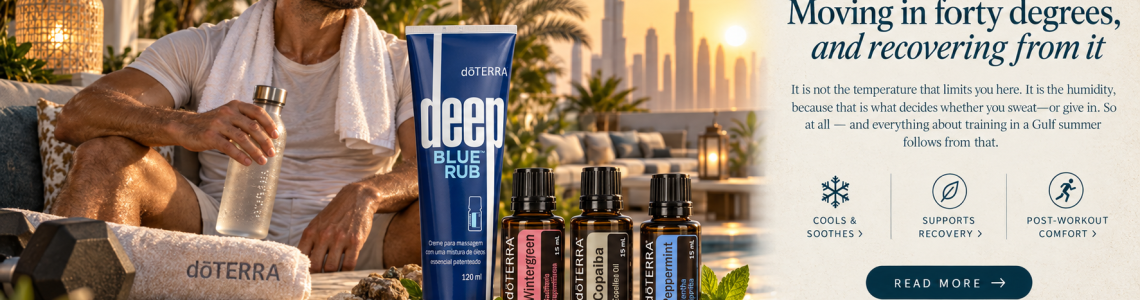
Moving in forty degrees,
and recovering from it
It is not the temperature that limits you here. It is the humidity, because that is what decides whether your sweat can do its job at all — and everything about training in a Gulf summer follows from that.
Five forty in the morning in August, which is the only sensible hour, and it is already thirty-four degrees with the humidity of a bathroom. The run that felt easy in February is now genuinely difficult at a pace two minutes slower, the sweat is not evaporating so much as accumulating, and your heart rate is fifteen beats higher than the effort deserves. Nothing about your fitness has changed since the spring. Everything about the conditions has.
People who move here tend to interpret this as a loss of form and respond by pushing harder, which is the one approach that reliably makes it worse. The physiology involved is well characterised, it explains every part of that experience, and it points to a set of adjustments that work — none of which is about willpower.
Your body cools itself almost entirely by evaporating water from the skin. In humid coastal air that mechanism is throttled at the source, which is why a humid thirty-eight degrees is harder than a dry forty-five.
myTERRAThe first half of this guide is the physiology of moving in heat: evaporative cooling and why humidity is the real limit, what sweat carries away besides water, the fortnight of genuine adaptation available to you, and what delayed soreness actually is. The second half is recovery, including an honest account of how topical rubs work — which is mostly through sensory nerves rather than by reaching a muscle — and the safety points around methyl salicylate that most articles on this subject skip entirely.
Six things heat is doing to your training
Standard exercise physiology, none of it specific to essential oils, and all of it useful for deciding what to change.
Once the air is warmer than your skin, you cannot lose heat by radiation or convection in any useful quantity. Almost all cooling then depends on evaporating sweat, and evaporation depends on how much water the surrounding air can still accept. Coastal Gulf humidity is high, so the sweat stays on you instead of leaving as vapour, and you get the discomfort of drenched clothing with very little of the cooling it is meant to buy. This is the whole reason a humid thirty-eight feels worse and is more dangerous than a dry forty-five, and why inland conditions are easier than the coast at the same reading.
Sweat rates during hard effort in heat are substantial, and what leaves with the water includes sodium in quantities that vary widely between individuals — some people are markedly saltier sweaters than others, which is visible as white residue on a cap or a dark shirt. Replacing large fluid losses with plain water alone, over long sessions, dilutes what remains. That is the actual basis for electrolyte drinks, which are genuinely useful for long or repeated sessions in this climate and largely unnecessary for a thirty-minute gym visit. Thirst is a lagging indicator, so weighing yourself before and after a long session tells you far more.
The body adapts to heat, and it does so faster than most people expect: over roughly ten days to a fortnight of regular exposure, plasma volume increases, sweating begins earlier and more freely, and sweat carries less sodium. The result is a measurable improvement in how the same effort feels. Two practical consequences. First, the first two weeks of summer, or of arriving here, are genuinely the worst and should be treated as an adaptation period rather than a verdict on your fitness. Second, the adaptation fades within a few weeks of air-conditioned living, which is why returning from a European holiday in August feels like starting again.
As core temperature rises and blood is diverted to the skin for cooling, less is available to the working muscles, heart rate climbs for the same pace, and the effort you can sustain drops. This happens well before any warning symptoms appear, which is why pace is a poor guide in summer and perceived effort is a better one. Practically: run by feel rather than by the watch, expect slower times at the same effort, and treat that as accurate information rather than failure. Pushing to hold a February pace in August is how people end up unwell rather than fitter.
The stiffness that arrives the day after unfamiliar exercise, peaks somewhere between one and three days later and then fades has nothing to do with lactate, which clears within an hour or so of finishing. It follows microscopic damage to muscle and connective tissue and the inflammatory repair process that follows, and it is most pronounced after lengthening movements — running downhill, lowering weights slowly, a first tennis match in a year. It is a normal part of adaptation rather than an injury, it does not require treatment, and gentle movement usually eases it more than rest does.
Menthol and camphor produce their sensation by acting on the temperature and irritant receptors in the skin — menthol triggers the cold receptor, which is why something at room temperature feels cold. That sensory input competes with pain signals travelling to the spinal cord, which is the mechanism behind counter-irritant rubs and a real, if modest, effect. Salicylates absorbed through skin add a local contribution. What none of this does is reach deep into a muscle and repair it. A rub changes how an area feels, and combined with the massage it is applied with, that is a reasonable thing to want.
Four kinds of discomfort, and only one of them is ordinary
A rub is appropriate for one of the four patterns below, unhelpful for another, and actively the wrong response to the last two. Working out which you have matters more than which product you own.
The fourth category is the one to read carefully. Heat illness in this climate is not a theoretical risk, and it is the one situation in this article where the correct action is to stop immediately and get help.
Generalised stiffness in the muscles you used, appearing the next day, symmetrical, worst on the second morning, improving by the third or fourth. Normal adaptation. Gentle movement, sleep, food and time; a rub for comfort if you want one. No treatment required and nothing to be concerned about.
A specific moment, a specific spot, often with swelling or an inability to bear weight. This is an injury, not soreness. Stop, protect, elevate, and get it assessed if you cannot weight-bear, the joint feels unstable, or the swelling is marked. Do not massage a fresh acute injury, and do not rub something warming into it.
Achilles, knee, shoulder or elbow pain that builds over weeks, hurts at the start of activity, and keeps returning. This is a loading problem, and the fix is a graded programme rather than a topical product — which will make it feel better while the cause continues. Worth seeing a physiotherapist rather than managing indefinitely.
Cramping, nausea, dizziness, headache, clammy weakness or unusual fatigue in the heat means stop, get into shade or air conditioning, cool actively and take fluids. Confusion, disorientation, collapse, or hot skin that has stopped sweating is a medical emergency needing immediate help — not a rub, not a rest, and not a walk home.
Six ways people train here, and what each needs
the period over which meaningful heat acclimatisation develops with regular exposure — and it is lost again within a few weeks of air-conditioned living or a holiday somewhere cooler.
Reference: standard heat acclimatisation physiologywhen delayed muscle soreness typically peaks after unfamiliar exercise. It follows microscopic tissue damage and repair, not lactate, which clears within about an hour of finishing.
Reference: standard exercise physiology, typical valuesa commonly cited range for sweat losses during hard effort in hot conditions, varying widely between individuals. Weighing before and after a long session is far more informative than thirst.
Reference: commonly cited sweat rate ranges in the heatFigures given for orientation, as general reference points rather than clinical measurements. Every body responds differently — consult a qualified professional for individual guidance.
TERRA
WI
Persistent soreness, flat sessions and a heart rate that will not settle are as often a recovery problem as a training one — short nights, a heavy travel month, food that has not kept up with the load. The myTERRA Wellness Index scores five pillars and shows which one is actually carrying the weight.
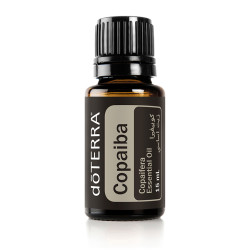
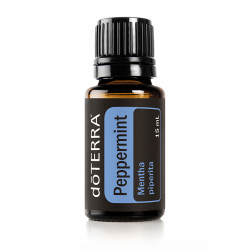
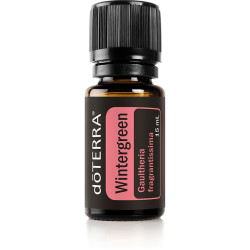
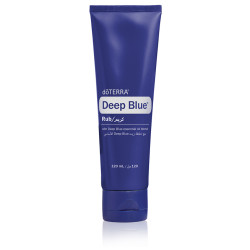
Deep Blue Rub, Wintergreen, Copaiba and Peppermint
All four are for comfort after effort, and the differences between them are mostly about strength and about who should not use them. Wintergreen and Deep Blue Rub contain methyl salicylate, which brings real cautions; Copaiba and Peppermint do not. None of them treats an injury, accelerates healing, or substitutes for assessment of something that is not getting better.
Deep Blue Rub
Topical cream 120ml · Deep Blue blend in a moisturising base — wintergreen, camphor, peppermint, blue tansy, blue chamomile, helichrysum, osmanthusDeep Blue Rub is the most practical product in this article for the simple reason that it arrives ready to use: the blend is already dispersed in a cream base, so there is no dilution to judge and nothing to mix after a session when you want to do neither. The sensation is the strongest of the four and it is deliberately two-phase — an immediate cooling from menthol acting on cold receptors, followed by a warmth as camphor and methyl salicylate take over. That contrast is what people mean when they say it works, and the mechanism is sensory: strong input from the skin competing with pain signals on their way to the spinal cord, plus the effect of the massage itself. It suits large areas and thick muscle groups after unfamiliar effort — quads after a first long run of the season, shoulders after a heavy session, the back of a neck that has spent a week at a desk. The cautions are not decorative. It contains methyl salicylate, so it should be avoided by anyone allergic to aspirin or taking anticoagulants without medical advice, is not for use in pregnancy without advice, is not for young children, and must be kept away from broken skin, eyes and mucous membranes. Do not apply it before a hot bath, a sauna, a heat pack or sun exposure, because heat substantially increases salicylate absorption through skin.
- ◆Large muscle groups after unfamiliar effort — quads, calves, shoulders, upper back
- ◆Wash your hands afterwards, and never touch eyes or face
- ◆Not before a hot bath, sauna, heat pack or sun — heat raises absorption
- ◆Aspirin allergy, anticoagulants, pregnancy: medical advice first
- ◆Not for young children; not on broken skin
Wintergreen
Gaultheria procumbens — 15ml · Steam distilled from the leavesWintergreen is almost entirely a single molecule — methyl salicylate typically makes up the overwhelming majority of the oil — and that concentration is both why it is effective as a warming topical and why it is the oil in the doTERRA range that requires the most care of any. Methyl salicylate is chemically related to aspirin, is absorbed through skin, and is genuinely toxic if swallowed, with a very small volume being dangerous to a child. That is not a cautious formality: it is the reason this bottle should be stored where a child cannot reach it and never decanted into anything unlabelled. Used properly — one drop heavily diluted in carrier oil, on a specific area, on intact skin — it gives a warming counter-irritant sensation that many people find useful on a stiff shoulder or lower back. Who should not use it: anyone allergic or sensitive to aspirin or other salicylates, anyone taking anticoagulants or regular aspirin without medical advice, anyone pregnant or breastfeeding without advice, and children. And as with Deep Blue Rub, no heat afterwards — no bath, sauna or heat pack, because heat increases how much gets through the skin.
- ◆One drop heavily diluted in Fractionated Coconut Oil, on one specific area
- ◆Store out of children's reach; never decant into an unlabelled bottle
- ◆Never internally, and never on broken skin
- ◆No bath, sauna or heat pack afterwards
- ◆If you would avoid aspirin, avoid this — ask your doctor first
Peppermint
Mentha piperita — 15ml · Steam distilled from the leavesIn this context peppermint does one specific thing well: it feels cold. Menthol binds the receptor the body uses to detect cold, so a diluted application at room temperature produces a distinct cooling sensation without changing the temperature of anything — which is why a drop on the back of the neck after a hot session is so disproportionately pleasant. There is also reasonable evidence that menthol improves thermal comfort and perceived effort in hot conditions, and this is worth being precise about, because it cuts both ways. Feeling cooler is not the same as being cooler, and in genuine heat stress a sensation of relief that is not matched by a fall in core temperature can mislead you into continuing when you should stop. Use it as a comfort after finishing rather than as a way to extend a session in dangerous conditions. Its advantage over the two salicylate products here is that it carries none of their contraindications — no aspirin relationship, no anticoagulant interaction — though it still needs dilution, still must stay away from eyes, and still should be kept off the faces of children under six.
- ◆Diluted on the back of the neck or forearms after a hot session
- ◆Comfort after finishing — not a licence to keep going in dangerous heat
- ◆The choice where salicylates are contraindicated
- ◆Dilute well; a little is genuinely enough
- ◆Not near the face or nostrils of children under six
Copaiba
Copaifera officinalis, coriacea, reticulata & langsdorffii — 15ml · Steam distilled from the resinCopaiba is the quiet member of this group and, for daily use, often the most sensible. It produces no cooling and no warming — there is no menthol, no camphor and no salicylate in it — so if you judge a product by how strongly it announces itself on the skin, this one will disappoint. What it has instead is an unusually high proportion of β-caryophyllene, a sesquiterpene with documented affinity for the CB2 receptor of the body's own endocannabinoid system, which is associated with inflammatory signalling rather than with the psychoactive effects mediated by CB1, at which β-caryophyllene is inactive. Two clarifications, since this oil attracts more confusion than any other: it contains no CBD and no THC, has no botanical relationship to cannabis, and is not psychoactive; and the human clinical evidence remains limited, so the honest description is an interesting mechanism rather than an established treatment. Where it earns its place here is the situations the salicylate products rule out — anyone on anticoagulants, anyone with aspirin sensitivity, anyone who wants something for a stiff neck every evening rather than occasionally, and anyone whose skin objects to strong counter-irritants. Warm, woody, faintly peppery, and gentle enough on skin for regular diluted use.
- ◆Diluted on a stiff neck, shoulders or lower back, daily if you want
- ◆The option where Wintergreen and Deep Blue Rub are contraindicated
- ◆Gentle on skin — the choice when counter-irritants are too much
- ◆No cooling or warming sensation; judge it over weeks, not minutes
- ◆No CBD, no THC, no psychoactive effect — a different plant entirely
Use with care — the salicylate section matters: Wintergreen is composed almost entirely of methyl salicylate, and Deep Blue Rub contains it. Methyl salicylate is related to aspirin, is absorbed through the skin, and is toxic if swallowed — a very small amount is dangerous to a child, so store these products out of reach and never decant them into unlabelled containers. Avoid both if you are allergic or sensitive to aspirin or other salicylates, if you take anticoagulants or regular aspirin, if you are pregnant or breastfeeding, or for children, unless your doctor advises otherwise. Never apply either before or after a hot bath, sauna, heat pack or sun exposure, since heat markedly increases absorption, and never on broken skin, near the eyes or on mucous membranes; wash hands after use. Dilute undiluted oils in Fractionated Coconut Oil and patch test first. Peppermint and Copaiba contain no salicylates and are the appropriate alternatives where the above applies. None of these products treats an injury or speeds healing, and a topical that masks the discomfort of an overuse problem while you keep loading it is working against you. Anyone managing a diagnosed condition or taking regular medication should speak to their doctor before regular use.
Four routines, in the order they are worth your effort
Timing: the hour after dawn is the only comfortable outdoor window for months, and it is also when humidity is often highest — so even then, expect it to be hard. Indoors is not defeat. Effort, not pace: go by breathing and perceived effort and accept that the same effort produces a slower pace; the watch will tell you that you have got worse and it will be wrong. Acclimatise deliberately: treat the first ten to fourteen days of the hot season as a reduced-volume block rather than a test. Expect to lose it: two weeks somewhere cooler and you start the adaptation again — plan the return, don't be surprised by it.
Before: arrive already hydrated rather than trying to catch up mid-session — pale urine in the couple of hours beforehand is a reasonable indicator. During: for anything under about an hour, water is fine. For long or repeated sessions in this heat, where losses are large, an electrolyte drink has a genuine rationale rather than a marketing one. After: if you can, weigh yourself before and after a long session — the difference is mostly fluid, and it tells you more than thirst ever will. And don't overdo it: drinking far in excess of losses is its own problem, not extra credit.
First: sleep, which is where the overwhelming majority of physical repair happens, and food with adequate protein. Nothing in a tube competes with either. Second: gentle movement on the sore days — walking, easy cycling, an unhurried swim — which generally eases delayed soreness more than complete rest. Third, for comfort: Deep Blue Rub on large muscle groups after unfamiliar effort, Copaiba diluted for something you want to treat every evening, Peppermint diluted on the neck when you are simply overheated. What to skip: anything promising to speed healing.
On MetaPWR: MetaPWR is an aromatic blend of grapefruit, lemon, peppermint, ginger and cinnamon bark, and we are not going to present it as a weight-loss or metabolism product, because the evidence does not support that framing. It is a bright, warm blend that some people like to diffuse in the morning. The unglamorous truth: protein, sleep, consistency and sensible progression produce the results; supplements fill gaps at the margin.
Five things worth getting right
-
01Judge the session by effort, not by the watch
In summer here, the same effort buys a slower pace, a higher heart rate and a shorter distance, and that is physiology rather than deterioration. People who insist on holding spring paces through August do not maintain fitness; they accumulate fatigue, lose sleep and occasionally end up unwell. Write down perceived effort rather than pace for the hot months, compare like with like in October, and you will find the fitness was there the whole time. This single reframing prevents most summer training mistakes.
-
02Never combine salicylates with heat
This is the most important safety point in the article and the one most often missed. Applying Wintergreen or Deep Blue Rub and then getting into a hot bath, a sauna, a steam room or under a heat pack markedly increases how much methyl salicylate crosses the skin. The same applies to sun exposure on treated skin in this climate. Keep the rub for after a cool shower, not before a hot one, and give it time before covering the area tightly. If you take anticoagulants or avoid aspirin, use Copaiba or Peppermint instead and do not improvise.
-
03A rub is comfort, not repair
Counter-irritants change how an area feels by competing with pain signals; they do not reach into a muscle and mend it, and nothing applied to skin shortens the timeline of tissue repair. That makes them a reasonable thing to enjoy and an unreasonable thing to rely on. The specific trap is overuse injury: a tendon that hurts every time you load it will feel better under a rub while the underlying problem continues to worsen, which is the definition of counterproductive. Comfort where the cause is benign; assessment where it is not.
-
04Feeling cooler is not being cooler
Menthol works on the receptor that detects cold, not on your temperature, so a drop on the neck produces genuine relief without moving your core temperature at all. In ordinary use that is simply pleasant. In real heat stress it is a hazard, because the sensation can persuade you to continue when the physiology says stop. Use cooling sensations after you have finished, in shade or air conditioning, and let symptoms rather than sensations decide whether to carry on. Actual cooling means shade, cold fluids, wet skin and moving air.
-
05Store the strong ones like medication
Methyl salicylate is toxic if swallowed and a very small quantity is dangerous to a child — Wintergreen in particular deserves to be treated the way you would treat tablets rather than the way you treat a fragrance. High shelf, original labelled bottle, never decanted into an unmarked dropper, cap on properly. This is the one place in aromatics where a household accident can be serious rather than merely unpleasant, and it costs nothing to get right. Mention it to anyone else in the house who uses the collection.
The questions this subject usually raises
Why is my running so much worse in summer when my fitness has not changed?
Because a large share of your cardiac output is being redirected to the skin to shed heat, leaving less for the muscles doing the work — so the same pace costs more, and heart rate rises for no gain. In humid coastal air the problem compounds, since the sweat you produce cannot evaporate efficiently and therefore cools you poorly. Expect slower times at identical effort, sometimes considerably slower, and treat that as a measurement of the conditions rather than of you. Two useful responses: record perceived effort instead of pace through the hot months, and give the first fortnight of the season over to acclimatisation at reduced volume. Fitness reappears in autumn largely intact.
Is Deep Blue Rub safe to use before a hot shower or sauna?
No, and this is worth taking seriously rather than treating as small print. Deep Blue Rub contains methyl salicylate, which is absorbed through the skin, and heat increases that absorption substantially — a hot bath, sauna, steam room, heat pack or strong sun on a treated area all push more of it through than intended. The sensible sequence is the reverse: shower first, apply afterwards, and let the area stay uncovered for a while rather than wrapping it tightly. The same principle applies to Wintergreen, more strongly, since it is almost entirely methyl salicylate. If you want something you can use before a sauna without thinking about it, use Copaiba.
Can I use these on my children after sport?
Not the salicylate products. Wintergreen and Deep Blue Rub are not appropriate for children, and Wintergreen in particular is genuinely hazardous if a small child swallows even a small amount, so it belongs stored like medication rather than like a cosmetic. Peppermint should be kept away from the faces and nostrils of children under six and diluted heavily for older children. Copaiba, well diluted, is the gentlest of the group. More useful than any of them for a child after sport: fluids, food, sleep and a day off the same activity — children's aches after unfamiliar exercise resolve on their own, and any pain that is one-sided, persistent or stops them using a limb normally should be seen by a doctor rather than rubbed.
Do ice baths, stretching or massage actually reduce soreness?
Partly, and less than their popularity suggests. Massage has reasonable support for reducing soreness and improving how people feel afterwards. Cold water immersion reduces soreness in the short term, though there is a live discussion about whether routine use after strength training blunts some of the adaptation you were training for — occasional use is uncontroversial, habitual use after every session is a trade-off. Static stretching before or after exercise does not meaningfully prevent soreness, which is one of the most consistently repeated pieces of misinformation in fitness. What does help reliably: gentle movement on the sore days, sleep, adequate protein, and progressing load gradually enough that severe soreness is rare in the first place.
How do I know if I am just overheated or in actual trouble?
The dividing line is the nervous system. Feeling hot, flushed, heavily sweating, tired and slower is ordinary in this climate and calls for stopping, shade, cooling and fluids. What changes the situation entirely is any alteration in how you are thinking or behaving — confusion, disorientation, unsteadiness, unusual aggression or irritability, slurred speech, collapse — or skin that is hot and has stopped sweating. Those signs mean a medical emergency: get emergency help immediately, move the person into shade or air conditioning, and cool them aggressively with water and moving air while you wait. Do not wait to see whether it passes, do not drive yourself anywhere, and never leave someone in that state alone.
Confusion, disorientation, slurred speech, collapse, or hot skin that has stopped sweating during exertion in heat is a medical emergency — seek emergency help immediately and cool the person while waiting. Seek same-day assessment for chest pain, breathlessness disproportionate to the effort, fainting during exercise, or an irregular or racing heartbeat that does not settle. Have an injury looked at if you cannot bear weight, a joint feels unstable, swelling is marked, or pain follows a specific sudden moment rather than building gradually. Pain that persists beyond a couple of weeks, returns every time you load the same area, or wakes you at night warrants a physiotherapist or doctor rather than continued self-management. Anyone with a heart condition, on medication affecting fluid balance or blood pressure, pregnant, or new to exercise should take medical advice before training in this heat. Nothing in this guide diagnoses or treats any condition, and nothing here should delay an assessment that is warranted.
The heat decides
the pace.
You decide the rest.
Take the free myTERRA Wellness Index assessment and find out which of the five pillars is carrying the load right now — immunity, digestion, energy and recovery, sleep and stress, or emotional balance — with a protocol built for that pattern rather than the average one.
Free Wellness Index assessment · Authentic doTERRA CPTG products · Delivery across the UAE
Related Products